
FAQs
People with lactose intolerance often avoid cow's milk and other dairy products, however research has shown that lactose intolerant individuals can usually tolerate up to 12-15g of lactose per day, which is equivalent to 250ml cow's milk.
The Australian Dietary Guidelines recommends that this amount of cow's milk may be well tolerated by lactose intolerant individuals when consumed with other foods and spread over the day. Each person with lactose intolerance will have their own level of tolerance. For those wishing to consume a larger daily volume of cow's milk, this should be guided by tolerance, or a lactase enzyme supplement may be taken to assist with a larger volume to be tolerated.
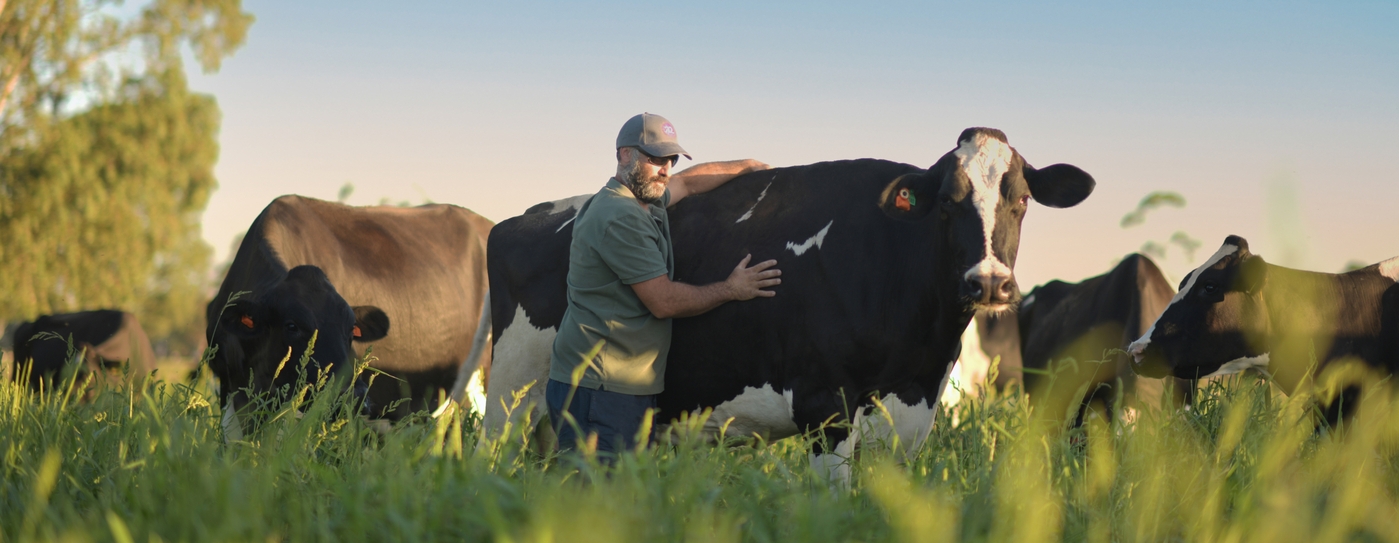
Cows originally produced milk with only A2-type beta-casein protein. Today, ordinary cows’ milk contains two types of beta-casein protein, A1-type and A2-type. a2 Milk® comes from cows specially selected to naturally produce milk with only A2-type beta-casein protein, and no A1-type. That’s why a2 Milk® may be easier on digestion than ordinary milk for some milk intolerant individuals, when consumed as part of a healthy, varied diet.
We do not remove A1 protein from the milk. Fresh a2 Milk® is naturally free of A1 protein.
Ordinary cows' milk contains a mixture of A1 and A2-type beta-casein protein. The difference with a2 Milk® is that it naturally contains only A2-type beta-casein protein. All cows will naturally produce A1, A2-type or a mixture of A1 and A2-type beta-casein protein in their milk, and this is determined by their genetics. To produce a2 Milk®, we select cows which naturally produce only A2-type beta-casein protein in their milk.
Full cream a2 Milk® is suitable for the whole family, including pregnant women and children, however, it should not be given as the main drink to infants under 12 months of age. Breastmilk is best for babies, with infant formula being the only suitable alternative if breastmilk is unavailable for infants under 12 months of age.
Small quantities of Full cream a2 Milk® may be given to infants from 6 months of age as part of solid foods, such as custards and on cereal, once they are developmentally ready for solid foods. If you are concerned about when to introduce cows' milk into your infant's diet, please speak with your healthcare professional.
There are Jersey cows in the herds supplying our a2 Milk®, however any breed of cow may have A2/A2-type genetics.
Every farm is different, but we have a mixture of Jersey, Holstein Friesian, Guernsey and others in our herds that supply our a2 Milk®. All our cows are tested to ensure they are cows with A2/A2-type genetics, that naturally produce milk with only A2-type beta-casein protein.
There is a growing body of scientific evidence that supports the unique digestive benefits of a2 Milk® for some milk intolerant people. a2 Milk® does not contain A1 beta-casein protein which has been shown to preferentially release the opioid BCM-7 on digestion. a2 Milk® only contains A2-type beta-casein protein and the structure of A2-type beta-casein limits the release of BCM-7 on digestion. Opioids in the gut may affect gut motility and absorption processes which may affect digestive comfort in some people.
If you're a health professional, you may wish to review some of the related scientific literature.
The beta-casein proteins found in dairy products made from goat, sheep and buffalo milk are different to those found in cows' milk. The A1 and A2-type beta-casein proteins discussed on this website are only found in cows' milk. The beta-casein proteins found in goat, sheep and buffalo milk are not called "A2 beta-casein". However, goat, sheep and buffalo milk do contain beta-casein proteins which have previously been described by some commentators as "A2-like". This is because some commentators have observed that these beta-casein proteins may behave in a manner similar to bovine A2-type beta-casein protein during digestion. However, the evidence on this topic is not conclusive, and emerging evidence suggests that beta-casein proteins from different animal species may have different physical, chemical and nutritive properties to one another.